Our history
Montfort has a rich history since its foundation in 1953.
- Montfort’s beginnings
-
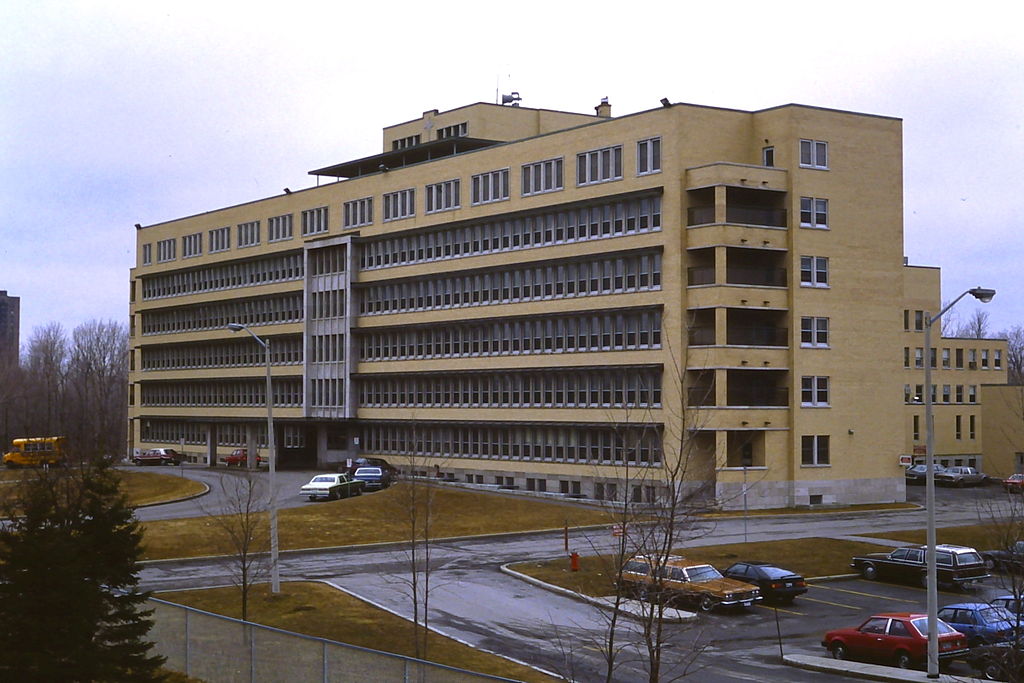
The hospital, known at the time as the Hôpital Saint-Louis-Marie-de-Montfort, was founded in 1953 by the Congregation of the Daughters of Wisdom, which had mortgaged all its properties in Canada as security to finance its construction. The Daughters of Wisdom ran the hospital until 1969.
Regarded as one of the most modern hospitals of its time, it initially comprised an emergency department, a surgical ward, a radiology department, a laboratory, 200 beds for adults and 50 beds for children. The hospital quickly established itself as a key institution within the community.
The hospital became a laic, public institution in 1970. Over the following years, several projects helped to modernise the hospital and expand the range of services. The departments of psychiatry and orthopaedics, the intensive care unit, and the cardiorespiratory and electroencephalography services were opened during the 1970s. The Montfort Long-Term Care Centre, formerly the Pavillon de la Sagesse, situated behind the hospital, welcomed its first residents in 1978. The palliative care unit was established a few years later.
The 1980s also brought their share of changes. On the one hand, technology took centre stage at the hospital on Montréal Road with the arrival of an ultrasound machine, a state-of-the-art device specialising in ultrasound imaging. On the other hand, it was the saga of the hospital’s renovation and expansion project that would define this period. Keen to meet the pressing needs of the community it serves, the hospital lobbied the authorities to finally secure the approval and funding needed to expand the emergency department from 1,000 to 15,000 square feet…
Towards the end of the 1980s, management realised that the hospital was no longer meeting the community’s needs. It opted for a shift towards outpatient care and established a day surgery clinic for minor procedures under local anaesthetic, and an outpatient clinic for consultations and diagnostic tests that did not require hospitalisation.
In 1990, a ground-breaking ceremony marked the start of Phase II of an expansion project: the construction of the south wing. In 1992, the south wing (now Wing A) was opened. It houses several departments, including the emergency department, the operating room and a new nursing unit. That same year, the hospital signed an agreement with the University of Ottawa. The partnership between the Faculty of Medicine and Montfort focused on the clinical teaching of family medicine in a French-speaking environment.
Once the extension work was completed, the hospital began renovating the laboratory and imaging facilities to install a CT scanner in 1993 – a state-of-the-art technology that speeds up diagnosis and treatment, whilst reducing hospital stays and inter-hospital patient transfers.
In 1995, Montfort launched two new services: telemetry, a portable cardiac monitoring device that allows the user greater mobility whilst maintaining continuous monitoring of cardiac activity; and the Family Birthing Centre, which offers a welcoming and unique environment for childbirth.
- SOS Montfort crisis
-
On 24 February 1997, the Ontario Health Services Restructuring Commission recommended the closure of Montfort, the only francophone academic hospital in Ontario and in the rest of Canada west of Quebec.
The Francophone community reacted strongly. Under the leadership of CEO Gérald Savoie, Chair of the Board of Directors Michelle de Courville Nicol and former Mayor of Vanier and Chair of the SOS Montfort movement Gisèle Lalonde, a full-scale campaign was launched: “Montfort fermé? Jamais! [Montfort closed? Never!]”
Following massive demonstrations, notably the “grand rally” on 22 March 1997 at the Ottawa Civic Centre, and extensive media coverage, the case went before the Ontario Divisional Court. In December 1999, Montfort won its case on the strength of the unwritten fundamental principle of the Constitution: the respect for and protection of linguistic minorities.
A few days after this ruling, the government lodged an appeal against the decision. Two years later, on 7 December 2001, Montfort secured a final victory before the Ontario Court of Appeal.In February 2002, the Minister of Health and Long-Term Care, Tony Clement, visited Montfort to announce that the Ontario government of Premier Mike Harris would abide by the Court of Appeal’s ruling and would not take the case to the Supreme Court of Canada.
The judgement assigns Montfort an institutional role as an establishment “essential to the Franco-Ontarian community”, which entails the following responsibilities:
- Preserving the French language
- Passing on French culture
- Fostering solidarity within the Franco-Ontarian minority
- Protecting the Franco-Ontarian community from assimilation
These events ended the greatest struggle the hospital has faced since it opened in 1953 and are undoubtedly one of the greatest victories for the Franco-Ontarian community.
To review the key dates in this historic case, visit the SOS Montfort Timeline page. The Montfort case stands out in three ways.
Firstly, it is a truly national cause, mobilising not only French-speaking but also English-speaking communities across the country, including massive support from Quebec. A debate on such a scale had not been seen since the fight against Regulation 17.
Secondly, the Montfort case has rewritten the rulebook on crisis management and the steps required to turn a death sentence into a resounding victory. It should be noted that there was never any question of accepting a compromise during the five-year struggle: the participants in SOS Montfort firmly believed that the slightest concession before the Commission would risk the eventual loss of the gains made and the certain demise of Montfort.
Thirdly, the Montfort case helped to clarify the intentions of the Fathers of Confederation regarding the rights of linguistic minorities at the time of Canada’s creation in 1867. Montfort’s lawyers, drawing on exhaustive historical research, demonstrated beyond any shadow of a doubt that the Fathers of Confederation intended for the two linguistic minority groups—Francophones outside Quebec and Anglophones in Quebec—to be equal, regardless of their numbers.
- Nouveau Montfort
-
As soon as the hospital’s survival was secured, its management turned their attention to expanding the premises and broadening the range of services. The hospital was preparing for a crucial transition that would enable it to fulfil its dual role as a service provider and a teaching institution, aiming for self-sufficiency in healthcare.
Plans were put forward to renovate the existing buildings and add approximately 450,000 square feet, more than double the hospital’s floor area at the time.
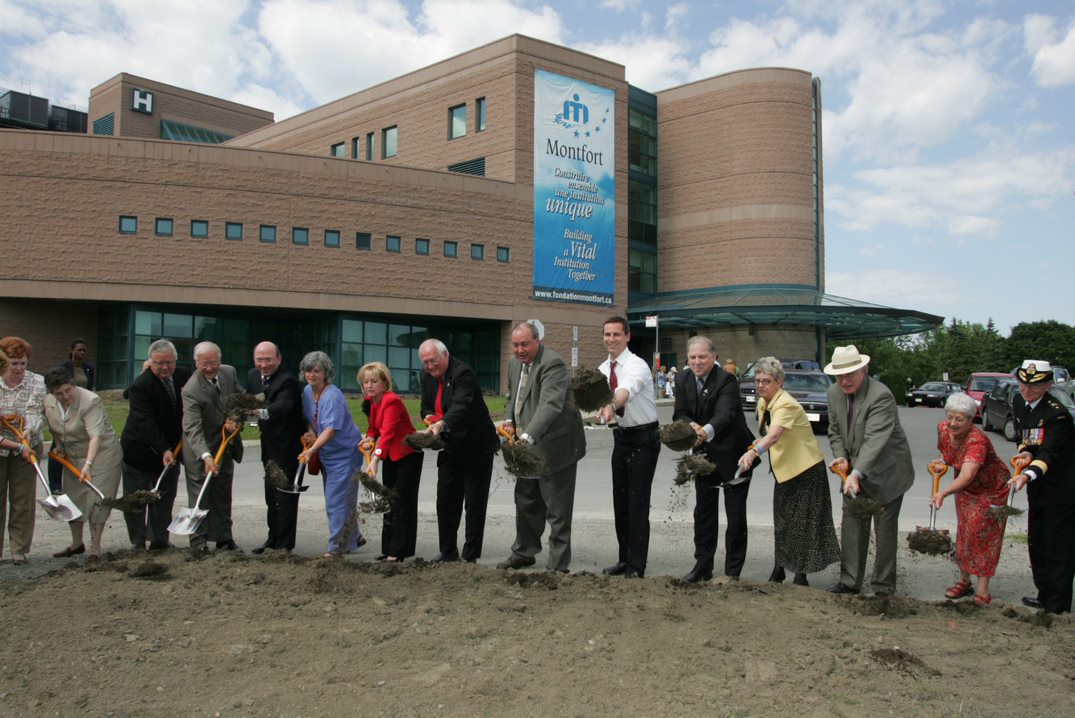
In July 2005, Dalton McGuinty’s provincial Liberal government granted Montfort funding of over $171.5 million. This Nouveau Montfort investment was used to double the hospital’s floor area, enabling Montfort to embark on its transformation into a world-class healthcare facility, practising best-in-class standards and equipped with the most advanced technology in the healthcare sector.
The hospital now has five wings; the original building from 1953 became Wing C, and the former south wing has been renamed Wing A.
The hospital’s expanded capacity translates into greater access to high-quality healthcare services for the community: in addition to extra intensive care beds, there is a fully refurbished emergency department in premises twice as large as before, capable of handling up to 56,000 visits per year; a new operating theatre dedicated entirely to advanced laparoscopic surgery; and revolutionary technologies in magnetic resonance imaging, digital mammography and nuclear medicine.
A significant increase in the teaching staff makes it possible to welcome and support the French-speaking students in medicine and health sciences who are essential to giving healthcare in French.
In 2009, Montfort Hospital became home to the new Canadian Forces Health Services Centre Ottawa, run by National Defence. The hospital sought this partnership with the federal government because it saw it as a key asset that would enable it to further expand the reach and reputation of its exceptional care and services.
Finalized in 2010, Nouveau Montfort is not only the largest expansion project in the hospital’s history, but also one of the largest infrastructure projects in the history of Ontario’s Francophone community.
- Ontario’s Francophone Academic Hospital
-
Launched in autumn 2009 and officially opened in 2012, the Institut de recherche de l’Hôpital Montfort (IRHM) is dedicated to pursuing research avenues aimed at improving the health of Francophones living in minority communities in Ontario and across Canada.
In June 2013, the Ontario government granted Montfort the designation of a Group A academic hospital. This marked the culmination of more than twenty years of campaigning to secure recognition of Montfort’s unique role in the French-language training of doctors and healthcare professionals in Ontario.
This official designation, which guarantees the permanent nature of a French-language medical education program in the province, comes with increased responsibilities for the hospital’s management, who are required to work closely with the Ontario Ministry of Health and Long-Term Care.
In her letter of June 2013, designating Montfort as an academic hospital, Ontario’s Minister of Health emphasised that Montfort is part of the solution to improving access to healthcare in Ontario, particularly for Francophone communities. The Ministry and Montfort Hospital will work together to further develop this role as an academic hospital and contribute to healthcare in Ontario, particularly in the following areas:
- participating in the planning and support of French-language health services in communities across Ontario, including clinical support for patients and professionals;
- supporting the Government of Ontario in fulfilling its responsibilities under the French Language Services Act;
- serving as a centre of excellence and a centre for the training of healthcare professionals in French, including a role in consolidating and coordinating clinical placements in French;
- establishing research and teaching programs in line with the designation.
In 2015, Montfort was ranked amongst the top 40 research hospitals in Canada, thanks to the work of researchers associated with the hospital. That same year, the Institut du Savoir Montfort (ISM) was established and officially launched in 2017, bringing together the IRHM team and Montfort’s Academic Affairs Department. The ISM is one of only two hospital-based institutes in Ontario – and the only French-speaking one – that directly combines research and education.
Since its creation, the ISM has established itself as a leader in French-language research and education across the country. Its unique model, based on collaboration between researchers, educators and adult educators, facilitates the continuum of knowledge creation and transfer.
In 2019, Montfort was named one of the world’s 1,000 best hospitals, as ranked by the prestigious American magazine Newsweek. Nationally, in 2021, Montfort was ranked 55th out of the 100 best hospitals in Canada.
In June 2021, after several years of planning and construction, the Aline-Chrétien Health Hub in Orléans finally welcomed its first patients. Led by Montfort, the Aline-Chrétien Health Hub project is a partnership between Bruyère, the Ottawa Youth Services Bureau, CHEO, the Eastern Ottawa Resource Centre, Hôpital Montfort, ParaMed, Ottawa Public Health, Ottawa Community Geriatric Psychiatric Services and Champlain Home and Community Support Services. The Aline-Chrétien Health Hub is a unique and innovative model that brings together a range of specialist and community care services under one roof.
- Important dates
-
- 1953: Opening and official inauguration of the hospital, and the birth of the first baby. (11 October)
- 1954: The first residents and trainees from the University of Ottawa arrived
- 1956: Establishment of the Auxiliary Ladies’ Committee (the committee was disbanded in the early 1970s)
- 1956: Opening of the Montfort Nursing School (September); remained open until 1971
- 1961: First affiliation agreement with the University of Ottawa (28 December)
- 1974: Establishment of the Auxiliary and Volunteer Association
- 1986: Establishment of the Hôpital Montfort Foundation (1 April)
- 1989: Designation of the hospital under the French Language Services Act (19 November)
- 1990: First health sciences students from La Cité collégiale enrolled
- 1992: Affiliation agreement with the Faculty of Medicine at the University of Ottawa for teaching in French
- 1999: Establishment of the National Health Training Consortium (CNFS), in partnership with the University of Ottawa
- 2010: Official opening of the Nouveau Montfort (11 June)
- 2012: Official inauguration of the Institut de recherche de l’Hôpital Montfort (IRHM) (7 March)
- 2013: Provincial designation as a Group A academic hospital (13 June)
- 2017: Official opening of the Institut du Savoir Montfort (24 March)
- 2021: Opening of the Aline-Chrétien Health Hub (24 June)
- 2025: Establishment of the French Language Health Services Planning Centre, co-founded by Montfort and the Assemblée de la francophonie de l’Ontario
- 2026: Announcement of the forthcoming opening of the Montfort Ottawa West Community Family Health Team
- Our symbols
-
Caritas
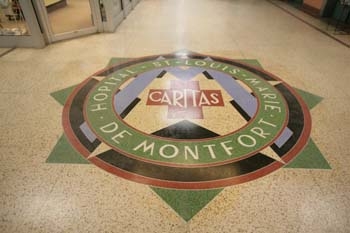

The Latin word ‘caritas’ has been engraved into the floor of the original main entrance since the hospital opened. It means ‘love for others’ and symbolises the philosophy of care upheld by the Daughters of Wisdom, the founders of Hôpital Montfort. As part of the major construction project carried out between 2007 and 2010, the management decided to preserve this symbol, which serves as a reminder of the founders’ spirit of compassion. La médaille du 22 mars
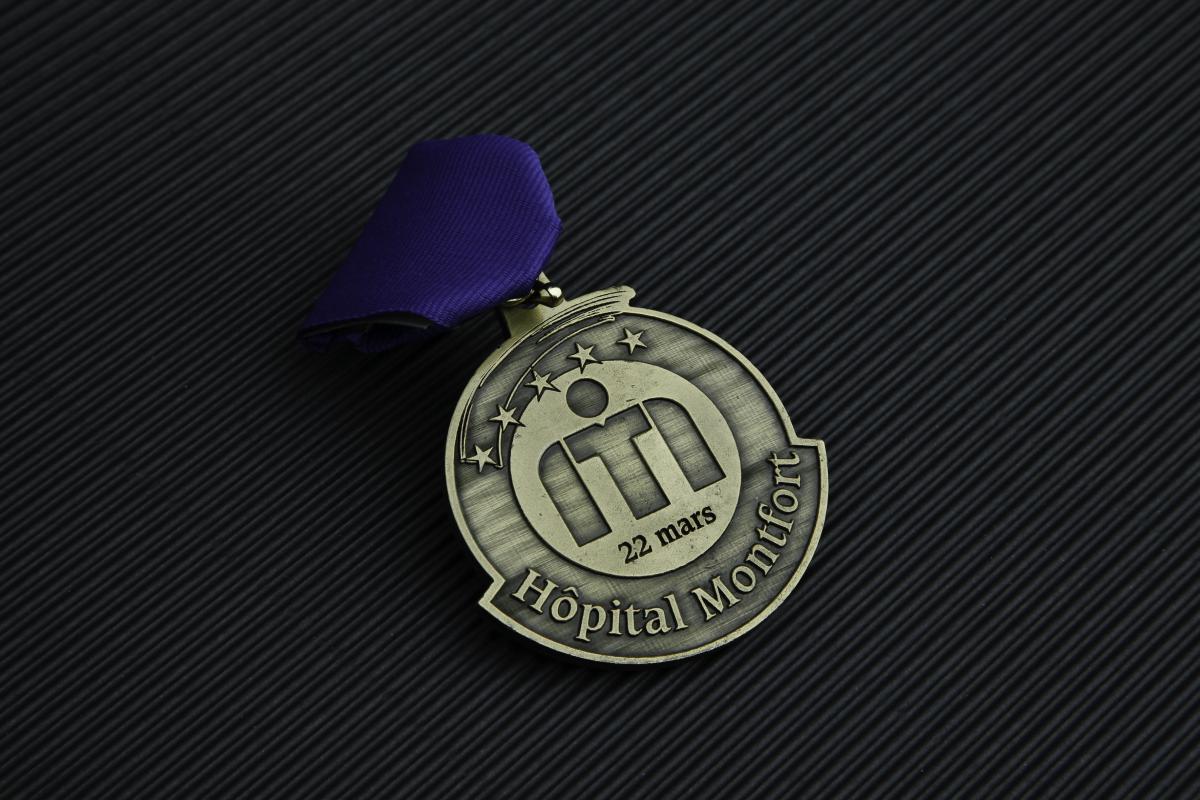
In March 2004, Hôpital Montfort announced the creation of the Médaille du 22 mars, which commemorates the Great Rally of 1997, when nearly 10,000 demonstrators gathered at the Ottawa Civic Centre to support the SOS Montfort cause.
The purpose of this medal is to recognise the perseverance, tenacity and pride of those who committed themselves to fighting for the hospital’s survival. Since 2004, 13 médailles du 22 mars have been awarded:
- In 2004, the first medal was awarded to all staff members in recognition of their leading role during the period of uncertainty that lasted for five long years. A generation later, in 2023, the medal was once again awarded to the entire Montfort staff for their courage and perseverance during the COVID-19 pandemic.
- In 2006, at the ground-breaking ceremony for the Nouveau Montfort, the hospital presented a medal to the Honourable Dalton McGuinty, then Premier of Ontario.
- Over the years, further medals have been awarded to key figures in the SOS Montfort movement: Gérald Savoie, CEO of the hospital from 1987 to 2009; Michelle de Courville Nicol, Chair of the hospital’s Board of Directors from 1995 to 2001; Gisèle Lalonde, President of SOS Montfort from 1997 to 2002; to the Honourable Mauril Bélanger, Member of Parliament for Ottawa-Vanier and a staunch defender of the rights of Francophones in minority communities, in 2016; to the Daughters of Wisdom, founders of the hospital, in 2017; and to Yves Tremblay, who chaired the largest fundraising campaign in the hospital’s history.
- Four other individuals have received the medal posthumously in recognition of their various contributions: Roger Bernard (2006), Pierre J.C. Lefebvre (2009), Michel Gratton (2011) and Jean-Robert Gauthier (2012).
L'Avenue du 22 mars
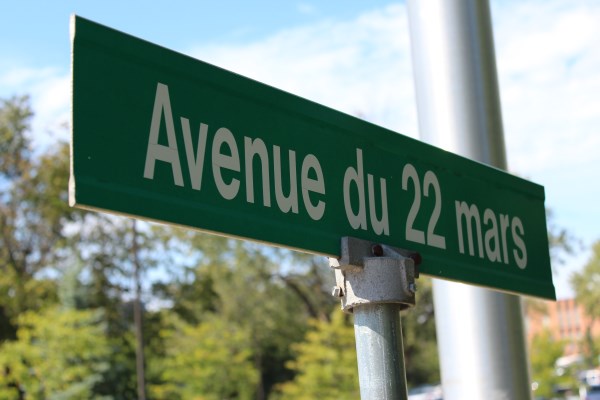
In March 1998, the road linking Chemin Montréal to the hospital was renamed ‘Avenue du 22 mars’. This name commemorates the anniversary of the Great Rally, which took place on 22 March 1997 at the Ottawa Civic Centre. La Voie Gisèle Lalonde
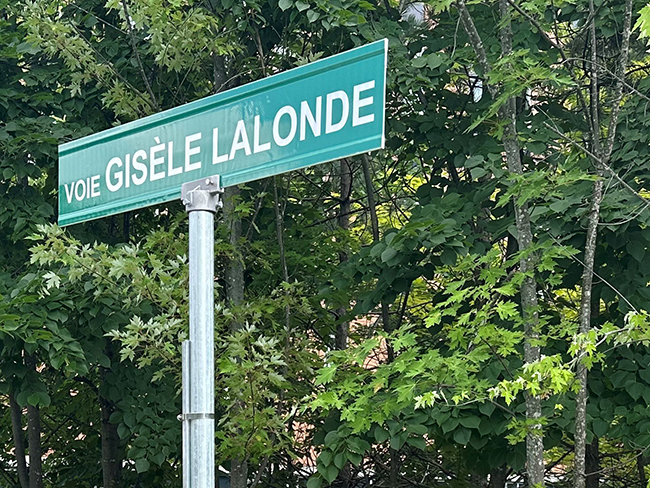
To mark the first anniversary of the death of Gisèle Lalonde, a leading figure in the SOS Montfort campaign to save the hospital from closure between 1997 and 2002, Montfort has named the road linking Promenade de l’Aviation to the hospital after her. On 27 July 2023, this road was named ‘Voie Gisèle Lalonde’. Le Monument de la francophonie
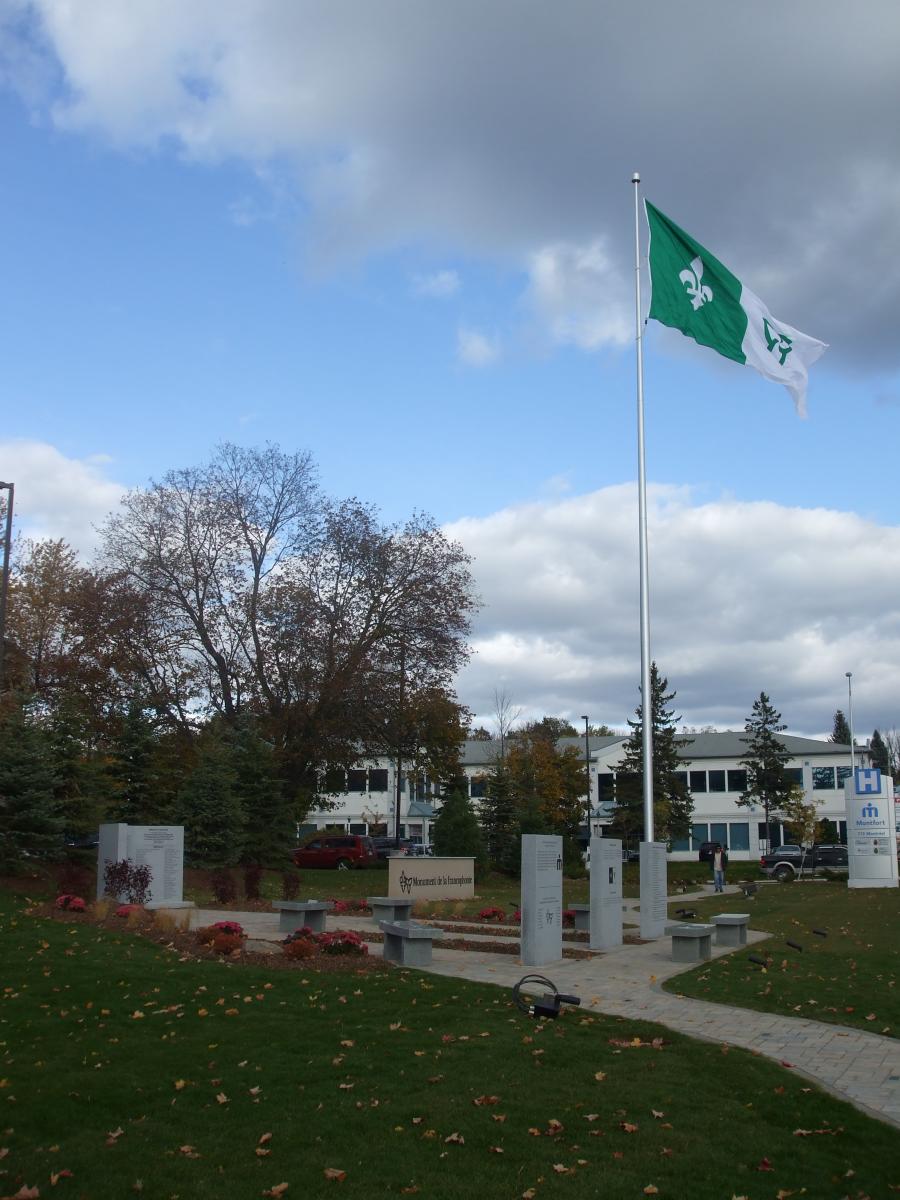
On 13 October 2010, a Monument de la francophonie was unveiled on the hospital grounds, near the entrance on Montréal Road. Like other monuments de la Francophonie, the one at Hôpital Montfort features a very large Franco-Ontarian flag. A commemorative and heritage area has also been created there. The inscriptions on the monument relate to the fields of health and social services. The Monument de la Francophonie at Montfort symbolises the French heritage, highlights the added value of the Francophonie in the national capital, and promotes an important symbol of the Francophonie in Ontario. Le Contre-monument
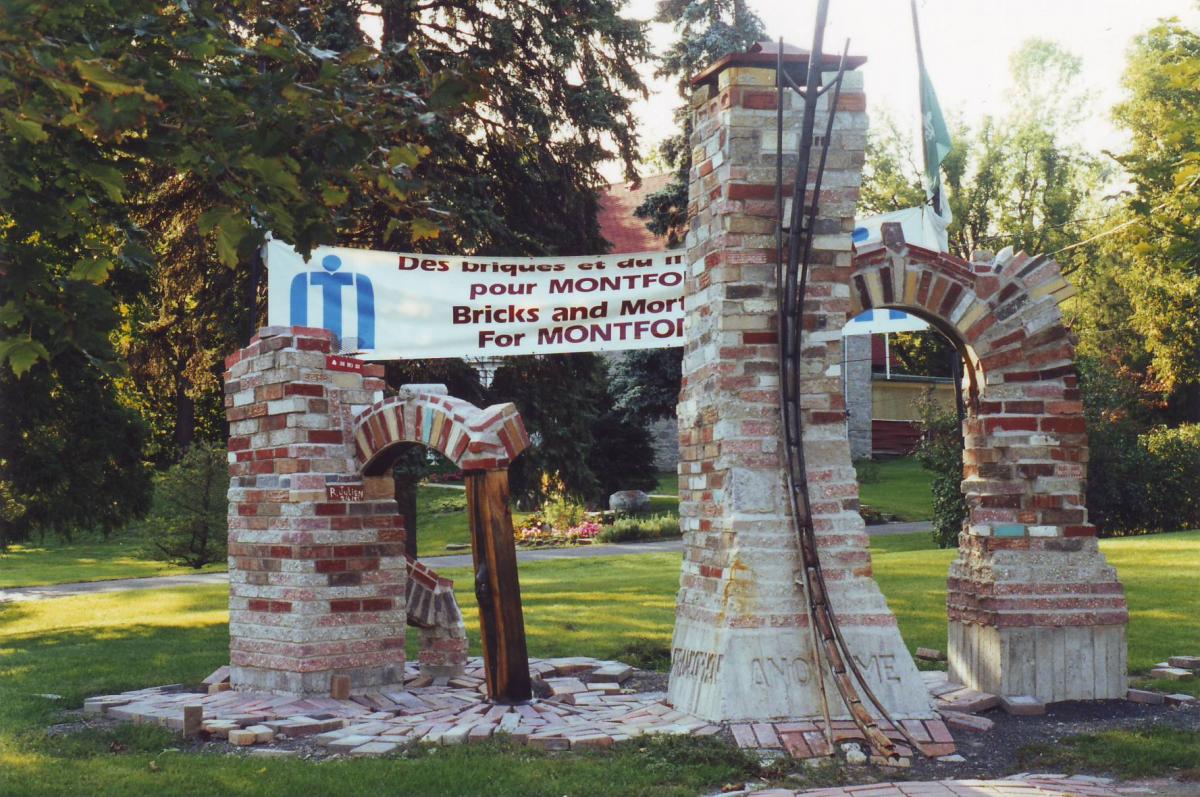
On 18 June 1997, a veritable procession of community leaders, including the chair of SOS Montfort, Gisèle Lalonde, and the auxiliary bishop of the Archdiocese of Ottawa, Monsignor Paul Marchand, set off from the hospital’s main entrance towards Chemin Montréal. All the participants were carrying a brick, with which to build a symbolic monument on the hospital grounds.
According to Michel Gratton, the instigator of this gesture, ‘[this] monument, deliberately made of bricks, was a reminder of the insulting remarks made by premier [Ontario] Mike Harris, [who had described] Montfort as a ‘pile of bricks and mortar’. The monument would be [a] symbol of the unyielding determination of a community that refused to bow to the incomprehension and intransigence of those who sought to reduce it to insignificance.” (Excerpt from Michel Gratton’s book, *Montfort – La lutte d’un peuple*, Centre franco-ontarien de ressources pédagogiques, 2003).
Michel Gratton is said to have dubbed it ‘the contre-monument’ [counter-monument], whilst the sculptor Yves (le Valencien) Leduc, who designed the work, has titled it ‘Ô francophones anonymes d’Amérique’; the name given to it by the leaders of the SOS Montfort movement and by journalists could not be clearer: ‘Monument de résistance de SOS Montfort’.
On 17 December 2015, the contre-monument was permanently installed in a location clearly visible to the public, near the main entrance to Hôpital Montfort, thus marking the final stage of the construction of the Nouveau Montfort, which began in 2006.
Notre image de marque
In the mid-1970s, a stylised ‘M’ began to appear on the hospital’s letterhead. This symbol became a registered trademark of Nouveau Montfort in 2006. The distinctive logo clearly identifies everything associated with the activities of a community-focused hospital, where patients remain at the heart of the staff’s concerns. In 2017, the brand identity was updated, whilst remaining true to the spirit of the original logo.
Vintage photographs